

Best sheets for hot sleepers: 6 fabrics ranked by breathability
UpdatedWritten by Derek Fontaine
Research and Development Scientist at Sleep Research Institute of the Rockies · Last updated: August 2026
The best sheets for hot sleepers are made from fibers that move moisture away from your body as vapor instead of holding it against your skin. By that measure, eucalyptus lyocell ranks first: it moves moisture vapor 34% faster than cotton (570 vs 425 g/m²/h in independent lab testing), so heat and sweat leave the surface quicker and you wake up less drenched. Linen and genuine bamboo lyocell follow, traditional cotton sits in the middle, and polyester microfiber is the one to avoid. Below, 6 common sheet fabrics are ranked by breathability, with the science behind why some keep you cooler than others, so you can stop kicking off the covers at 2 a.m.
- You sleep hot when your sheets trap a damp, warm layer against your skin. The fix is a fabric that releases moisture as vapor, not one that absorbs and holds it.
- Breathability is measurable. Eucalyptus lyocell moves moisture vapor 34% faster than cotton (570 vs 425 g/m²/h, independent lab testing), which is why it sits at the top of this list.
- Linen is genuinely breathable but rough and slow to dry. Genuine bamboo lyocell is good when it is truly lyocell, not relabeled rayon.
- Cotton percale and sateen feel fine at lights-out but absorb sweat and hold it at the surface, the exact reason you wake up clammy.
- Polyester and microfiber "satin" are the least breathable and trap the most heat. Skip them if you run warm.
- Thread count does not measure breathability. Fiber and weave do.
In this article
- Why you sleep hot, and what your sheets have to do with it
- What to look for in sheets for hot sleepers
- The 6 best sheet fabrics for hot sleepers, ranked
- The 6 fabrics compared at a glance
- Does thread count matter for hot sleepers?
- How to build a cooler bed, top to bottom
- Frequently asked questions
Why do you sleep hot, and what do your sheets have to do with it?
To fall asleep and stay asleep, your core body temperature has to drop by about 1 to 2 degrees Fahrenheit, and it stays low through the night (Sleep Foundation). Your body sheds that heat partly as moisture through your skin. If the fabric around you cannot move that moisture away fast enough, it builds into a warm, damp layer at the surface, your temperature creeps back up, and you wake up hot at 2 a.m. and throw off the covers.
Here is the part most "breathable sheet" marketing skips. There are two ways a fabric can handle that moisture:
- Absorb and hold it. Cotton and linen soak up sweat into the fiber and keep a damp layer near your skin until it slowly evaporates. We call this the damp-layer effect, and it is why "breathable" cotton can still leave you clammy. It matters beyond comfort, too: warmth and trapped moisture are recognized triggers for fungal acne.
- Transport it through the fiber and release it as vapor. Engineered eucalyptus lyocell pulls moisture into the fiber structure and releases it on the outside as vapor, so the surface against your skin stays drier and the heat goes with it.
That difference is measurable. Moisture vapor transmission rate, or MVTR, is the standard lab number for how fast a fabric moves moisture as vapor. The higher the number, the faster heat and humidity leave the surface you sleep on.

What should you look for in sheets for hot sleepers?
Ignore the marketing words and judge sheets on four things that actually decide whether you sleep hot:
- How it moves moisture (MVTR). Look for a fabric that transports moisture through the fiber and releases it as vapor, not one that simply soaks it up. This is the single biggest factor for hot sleepers.
- Fiber type over thread count. The raw material decides breathability far more than the number on the package. More on thread count below.
- Weave. A looser, lighter weave breathes better than a dense, heavy one. Percale and sateen behave differently even in the same fiber.
- Surface and care. A smooth surface is gentler on skin and hair through the night, and a machine-washable sheet that resists odor is one you will actually keep clean.
With those criteria set, here is how the six most common sheet fabrics stack up.
The 6 best sheet fabrics for hot sleepers, ranked
1. Eucalyptus lyocell, the best overall for hot sleepers
Eucalyptus lyocell is a plant-based fiber engineered to do the one thing hot sleepers need most: move moisture as vapor instead of holding it at the surface. In independent lab testing it moves moisture vapor 34% faster than cotton (570 vs 425 g/m²/h), so the warm, damp layer never gets a chance to build, and you stay closer to the temperature your body wants for deep sleep. It is also the smoothest fabric here at 0.11 μm surface roughness (56% less friction than cotton's 0.25 μm), and it harbors 3x less surface bacteria than cotton (Hohenstein Institute), which is why it stays fresh 2 to 3 times longer between washes. It is machine washable, OEKO-TEX Standard 100 certified, and certified hypoallergenic.
One caveat worth knowing: not all eucalyptus is equal. Much of the cheap "eucalyptus" sold online is generic viscose that pills by the second wash. Dreamey's CloudThera™ is a proprietary eucalyptus lyocell finished with DermaWeave™, the proprietary finishing process that produces its ultra-smooth, temperature-regulating surface, and the specs above are published openly rather than kept vague. If you want the breathability advantage, look for true lyocell with a spec sheet you can actually read.
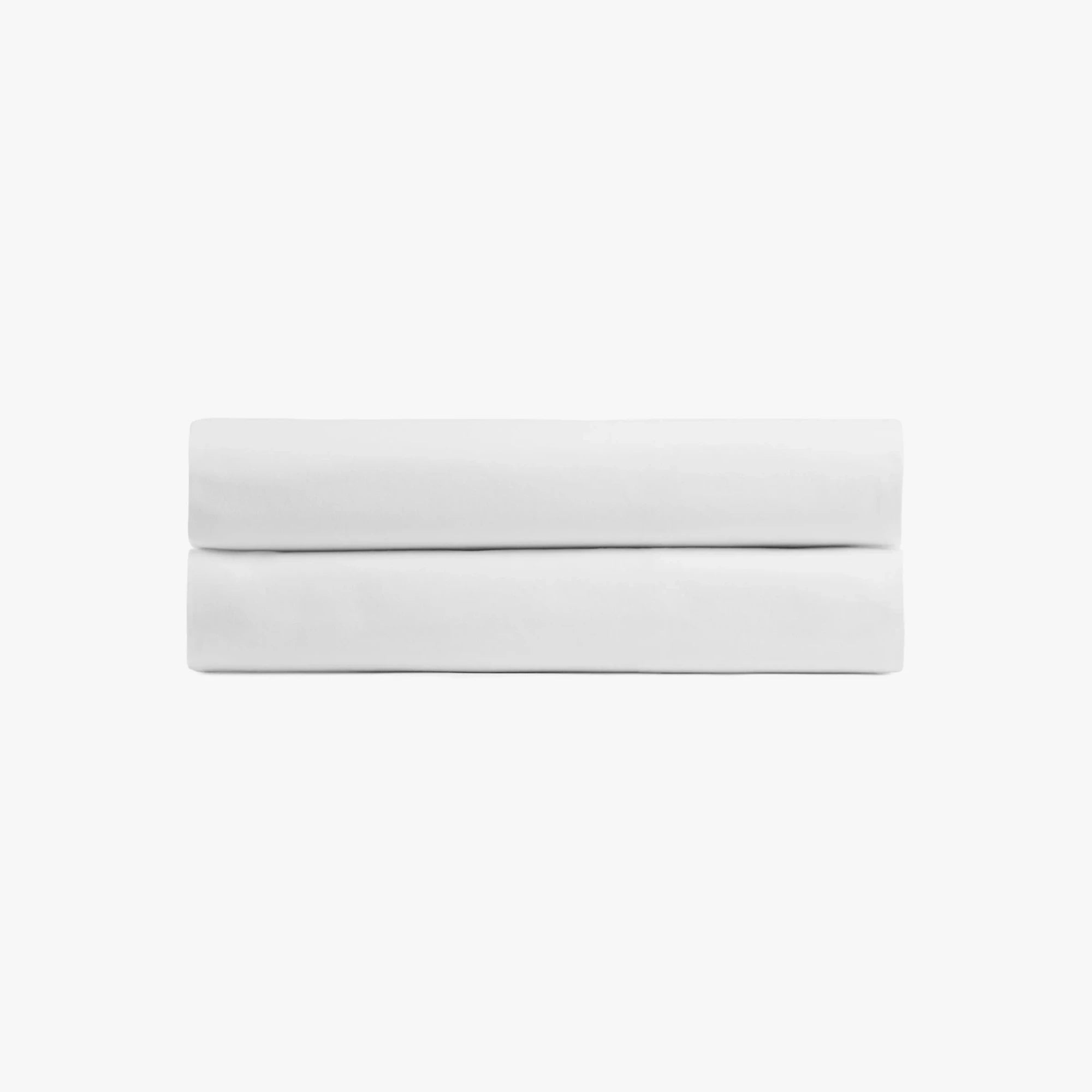
34% greater moisture vapor transmission than cotton, so heat and sweat leave the surface instead of pooling against you. Smooth, machine washable, and built to last.
Shop the sheet set →100-night risk-free trial. Free shipping. See the current price on the product page.
2. Linen, breathable but rough and slow to dry
Linen earns its reputation for hot-weather sleep honestly. Its thick flax fibers and loose weave let a lot of air through, so it feels airy at lights-out. The trade-offs matter for daily use, though. Linen absorbs moisture into the fiber and is slow to release it, so heavy sweaters can still end up with a damp, clammy feel by early morning. Its surface is noticeably rough, which drags on skin and hair, it wrinkles deeply, and quality linen is expensive. A strong pick for breathability alone, a weaker one once you factor in comfort against your skin.
3. Bamboo lyocell, good when it is genuinely lyocell
Genuine bamboo lyocell is soft, breathable, and moisture-wicking, which makes it a reasonable choice for hot sleepers. The problem is labeling. A lot of "bamboo" bedding is actually bamboo viscose (rayon), made with a more chemical-intensive process, and the lower-grade versions pill and thin out quickly. The U.S. Federal Trade Commission has fined retailers for marketing rayon as "bamboo." If it is true closed-loop lyocell, it can rival eucalyptus. If it is unlabeled cheap viscose, treat it closer to polyester.
4. Cotton percale, crisp at first but it holds your sweat
Percale is a plain, breathable weave that feels cool and crisp the moment you get in, which is why it gets recommended for hot sleepers so often. The catch is the fiber, not the weave. Cotton is absorbent by design, so it soaks up your sweat and holds that damp layer at the surface, where it keeps you warm and clammy until it slowly dries. That same absorbency is why cotton harbors 3x more surface bacteria than engineered eucalyptus (Hohenstein Institute). Percale is the best version of cotton for warm sleep, but it is still managing moisture the slow way.
5. Cotton sateen, softer but warmer
Sateen uses a denser weave that gives cotton a smoother, silkier feel and a subtle sheen. That density is exactly what works against hot sleepers: it traps more warmth and breathes less than percale, while still absorbing and holding moisture like all cotton. If you love the softer hand of sateen but run warm, this is the case for choosing a smoother fiber that breathes, rather than a denser weave that does not.
6. Polyester and microfiber "satin", the worst for hot sleepers
Inexpensive "satin" and microfiber sheets are usually polyester. "Satin" describes a weave, not a fiber, so they can feel smooth at first touch, but polyester is the least breathable option here. It traps heat and moisture against your skin, holds onto oils and odor rather than releasing them, and gives a warm sleeper the worst night of any fabric on this list. If you run hot, this is the one to avoid.

The 6 fabrics compared at a glance
| Fabric | Breathability (MVTR) | Moisture handling | Feel | Care | Best for hot sleepers? |
|---|---|---|---|---|---|
| Eucalyptus lyocell | 570 g/m²/h (highest) | Releases as vapor | Smooth (0.11 μm) | Machine wash | Best |
| Linen | High (airy weave) | Absorbs, slow to dry | Rough, wrinkles | Machine wash | Good |
| Bamboo lyocell | High (if true lyocell) | Wicks well | Soft | Machine wash | Good (if genuine) |
| Cotton percale | 425 g/m²/h | Absorbs and holds | Crisp | Machine wash | Fair |
| Cotton sateen | Below percale | Absorbs and holds | Soft, denser | Machine wash | Limited |
| Polyester / microfiber | Lowest | Traps heat and moisture | Smooth but occlusive | Machine wash | Avoid |
MVTR, surface roughness, and bacteria figures for eucalyptus lyocell and cotton reflect Dreamey CloudThera testing (Hohenstein Institute and independent textile laboratories). Linen, bamboo lyocell, and polyester are described qualitatively because performance varies widely by manufacturer and weave.
Does thread count matter for hot sleepers?
Thread count does not measure breathability, and chasing a high number can actually make you sleep hotter. Thread count is just the number of threads per square inch, so a very high count often means a denser, heavier weave that traps more heat. What decides whether you sleep cool is the fiber (does it release moisture as vapor or absorb and hold it) and the weave (is it light and airy or dense and heavy). A moderate thread count in a breathable fiber will keep a hot sleeper cooler than a 1,000-count cotton sateen every time. For the full breakdown of what that number does and does not tell you, see our guide to the best thread count for sheets.
How do you build a cooler bed, top to bottom?
Sheets are the surface against your skin, so they are the highest-leverage change. To get the full effect, match the rest of the bed to them:
- Start with the fitted and flat sheet. This is the fabric touching the most skin, so a breathable fiber here does the most work.
- Match the duvet cover. A breathable cover over your insert stops heat from building under the covers, where most hot sleepers struggle. If the insert-and-cover system is new to you, start with our guide to what a duvet cover is.
- Use the right pillowcase. Your face and neck sweat too, and a smooth, breathable pillowcase keeps that area drier and gentler on skin and hair.
- Keep the room cool and dark. Around 65 to 68 degrees Fahrenheit is the commonly cited range for comfortable sleep.
- Wash smart. Skip fabric softener, which coats fibers and dulls how they move moisture.
If you tend to overheat through the whole bed, upgrading the sheets, duvet cover, and pillowcases together to the same breathable fiber is what makes the difference you can feel.
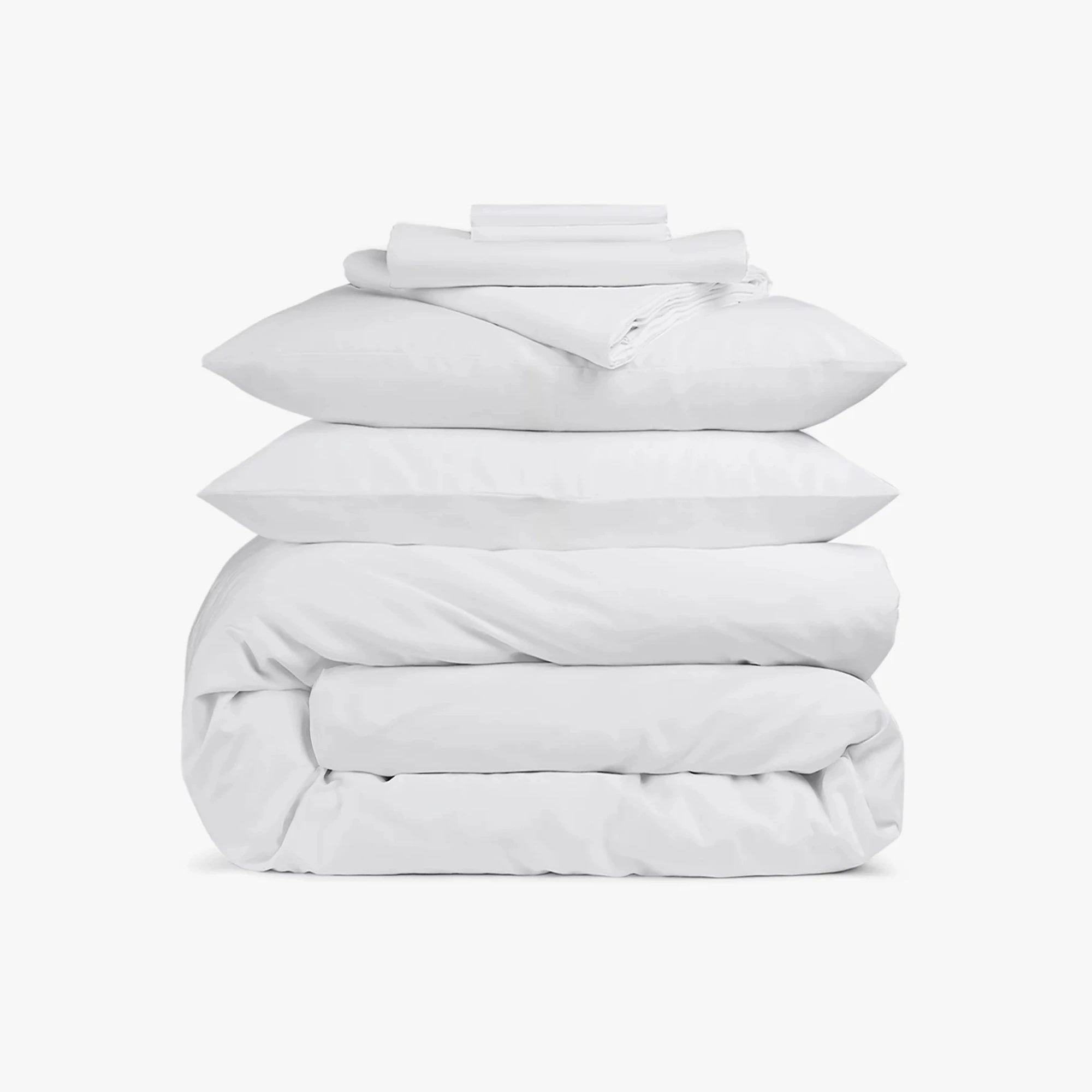
Sheets, duvet cover, and pillowcases in the same engineered eucalyptus fabric, so every surface around you moves heat and moisture the same way. The full upgrade for hot sleepers.
Shop the bundle →100-night risk-free trial. Free shipping. See the current price on the product page.
Frequently asked questions
What is the best material for sheets for hot sleepers?
Eucalyptus lyocell is the best material for hot sleepers because it releases moisture as vapor instead of absorbing and holding it. It moves moisture vapor 34% faster than cotton (570 vs 425 g/m²/h in independent lab testing), so heat and sweat leave the surface quickly. Linen and genuine bamboo lyocell are good runners-up, while cotton sateen and polyester trap the most heat.
Are eucalyptus or Tencel sheets good for hot sleepers?
Yes. Eucalyptus lyocell (the fiber often sold under the Tencel brand) is one of the best fabrics for hot sleepers. It transports moisture through the fiber and releases it as vapor, with 34% greater moisture vapor transmission than cotton, so it regulates temperature rather than trapping heat. It is also smooth and machine washable, unlike linen.
Are bamboo sheets good for hot sleepers?
Genuine bamboo lyocell is breathable and moisture-wicking, so it works well for hot sleepers. The catch is labeling: much "bamboo" bedding is actually bamboo viscose (rayon), and cheaper versions pill and breathe poorly. Look for true closed-loop lyocell, and if the fiber is not clearly specified, treat it with caution.
Is cotton or linen better for hot sleepers?
Linen breathes better than cotton thanks to its loose, airy weave, so it is the cooler of the two at lights-out. Both absorb moisture into the fiber rather than releasing it as vapor, though, so heavy sweaters can still wake up damp on either. Linen is also rougher and wrinkles more. For breathability plus a smooth feel, an engineered eucalyptus lyocell outperforms both.
Are these sheets good for night sweats and menopause?
Sheets that release moisture as vapor are well suited to night sweats, including those during perimenopause and menopause, because the issue is the same: your body is shedding heat and moisture faster than most fabric can move it away. A high-MVTR fabric like eucalyptus lyocell clears that moisture from the surface quickly so you are less likely to wake up soaked. Bedding is a comfort measure, not a medical treatment, so speak with your doctor about persistent night sweats.
What thread count is best for hot sleepers?
There is no single best thread count, because thread count does not measure breathability. A very high count usually means a denser, heavier weave that traps heat. Focus on a breathable fiber and a lighter weave instead. A moderate thread count in eucalyptus lyocell or percale will sleep cooler than a high-count cotton sateen.
Stop waking up hot at 2 a.m.
34% greater moisture vapor transmission than cotton means heat and sweat leave the surface you sleep on, instead of pooling against you. Measured, not marketed, and machine washable.
Shop the sheet set →100-night risk-free trial. Free shipping. Dermatologist approved.
Related reading: Best pillowcase for acne: 5 materials ranked · The science behind CloudThera fabric
Fabric performance figures (MVTR, surface roughness, surface bacteria) are from Hohenstein Institute and independent textile laboratory testing of Dreamey CloudThera fabric. Linen, bamboo, and polyester are described qualitatively. For persistent night sweats, speak with a healthcare professional.