

Best pillowcase for acne: 5 materials ranked for clearer skin
UpdatedWritten by Megan Caldwell
Attending Dermatologist at Northwestern Medicine Dermatology Naperville · Last updated: August 2026
The best pillowcase for acne is one that does three things at once: it harbors less bacteria, creates less friction, and moves moisture away from your skin instead of holding it against your face. By those measures, smooth plant-based fabrics like eucalyptus lyocell outperform cotton, silk, and polyester. The same logic applies to the whole bed: compare eucalyptus vs bamboo vs cotton sheets. Below, 5 common pillowcase materials are ranked for acne-prone skin, with the science behind each one, so you can stop guessing and start waking up to calmer skin.
- Acne-prone skin needs a pillowcase that is low-bacteria, low-friction, and breathable. Cotton struggles on all three.
- Cotton traps 3x more surface bacteria than engineered eucalyptus fabric (Hohenstein Institute testing) and creates 56% more friction (0.25 μm vs 0.11 μm surface roughness).
- Silk feels smooth, but it absorbs facial oils, stains, and offers no bacteria or breathability advantage for acne.
- Eucalyptus lyocell ranks first: 3x less surface bacteria, 56% less friction, 34% greater moisture vapor transmission, and it is machine washable.
- The material matters most, but pairing it with clean pillowcase habits is what you can verify in the mirror. A 100-night trial lets you test it on your own skin risk-free.
In this article
- Why your pillowcase affects acne
- What makes a pillowcase good for acne-prone skin
- The 5 best pillowcase materials for acne, ranked
- The 5 materials compared at a glance
- How to use your pillowcase to actually clear your skin
- Frequently asked questions
Why does your pillowcase affect acne?
Your face spends roughly 8 hours a night pressed into your pillowcase. That is about 2,920 hours a year of skin-on-fabric contact, which makes the surface you sleep on one of the most overlooked variables in your skincare routine. When breakouts show up only on the side you sleep on, the fabric is usually the suspect, not your serum, your diet, or your discipline.
Three things happen overnight that a pillowcase can make better or worse:
- Bacteria. Pillowcases collect oil, dead skin, and Cutibacterium acnes, the bacteria linked to breakouts, then transfer it back to your skin night after night.
- Oil and moisture. Absorbent fabrics soak up sweat, sebum, and skincare and hold that damp layer at the surface, exactly where bacteria multiply.
- Friction. A rougher surface drags on your skin as you move, which irritates the skin barrier, can deepen sleep creases, and aggravates already-inflamed areas.
For the full mechanism, see our dermatologist's guide to pillowcase hygiene and skin health. The short version: the right material reduces all three problems at once.

What makes a pillowcase good for acne-prone skin?
Ignore thread count. For acne, the fabric only needs to win on three measurable properties, plus be easy to keep clean.
- Low surface bacteria. Less bacterial load on the fabric means less transferred back to your skin.
- Low friction (surface roughness). A smoother surface means less mechanical irritation on inflamed skin and fewer sleep creases.
- High breathability (moisture vapor transmission). A fabric that moves moisture through the fiber and releases it as vapor keeps the surface drier, instead of trapping a damp, bacteria-friendly layer against your face.
It also helps if the pillowcase is machine washable (so cleaning it is easy), OEKO-TEX certified, and hypoallergenic (so the fabric itself is not an irritant). Here is how those three numbers look on engineered eucalyptus lyocell compared with cotton:
The 5 best pillowcase materials for acne, ranked
1. Eucalyptus lyocell, the best overall for acne
Eucalyptus lyocell is a plant-based fiber that wins on all three criteria at once. Instead of holding moisture at the surface like cotton, it transports moisture through the fiber and releases it as vapor, keeping the surface drier and far less hospitable to bacteria. Independent testing puts it at 3x less surface bacteria than cotton (Hohenstein Institute), 56% less friction (0.11 μm vs cotton's 0.25 μm surface roughness), and 34% greater moisture vapor transmission, which is the number behind temperature regulation (570 vs 425 g/m²/h). It is also machine washable, OEKO-TEX certified, and hypoallergenic.
One important caveat: not all eucalyptus is equal. Much of the cheap "eucalyptus" and "bamboo" sold online is generic viscose that pills by the second wash. Dreamey's CloudThera™ is a proprietary eucalyptus lyocell finished with DermaWeave™, the proprietary finishing process that produces its ultra-smooth surface, and the specs above are published openly rather than kept vague. If you want the bacteria, friction, and breathability advantages, look for true lyocell with a spec sheet you can actually read.

3x less surface bacteria, 56% less friction, and machine washable. The smoothest, lowest-bacteria surface to press your face into for 8 hours.
Shop the pillowcases →100-night risk-free trial. Free shipping. See the current price on the product page.
2. Bamboo lyocell, good with caveats
Genuine bamboo lyocell is soft, breathable, and moisture-wicking, which makes it a reasonable choice for acne-prone skin. The catch is labeling. A lot of "bamboo" bedding is actually bamboo viscose (rayon), made with a more chemical-intensive process, and the lower-grade versions pill and thin out quickly. The U.S. Federal Trade Commission has even fined retailers for marketing rayon as "bamboo." If it is true closed-loop lyocell it can beat cotton for acne. If it is unlabeled cheap viscose, treat it like polyester below.
3. Silk, smooth but overrated for acne
Silk earned its "beauty sleep" reputation for a real reason: it is genuinely low-friction (about 0.15 μm), which is gentler on skin and hair than cotton. But for acne specifically, it has limits worth knowing before you spend on it. Silk absorbs and holds facial oils and serums, which is why it stains, and that oil ends up sitting against your skin. It does not move moisture as vapor, it offers no bacteria advantage, and most silk is hand-wash only, so it is harder to keep clean. If a silk pillowcase disappointed you, the idea was not wrong. The material simply was not built to manage moisture and bacteria, which is what acne-prone skin needs most. If your main worry is hair rather than skin, see our companion ranking of the best pillowcase for hair.
4. Cotton, the default that works against you
Cotton is the most common pillowcase material and the one dermatologists are quietly skeptical of for acne. Cotton is absorbent by design, so it soaks up sweat, oil, and your skincare and holds that damp layer at the surface, where bacteria thrive. That is why it harbors 3x more surface bacteria than engineered eucalyptus (Hohenstein Institute). Its surface is also rougher (0.25 μm, or 56% more friction), so it drags on your skin all night, a shear force with consequences beyond acne, covered in our guide to why smile lines run deeper on one side. Organic and premium cotton are grown and woven more responsibly, but they behave the same way against your face. Cotton was built for cost and durability, not for acne-prone skin.
5. Polyester and microfiber "satin", the worst for acne
The inexpensive "satin" pillowcase is usually polyester. "Satin" describes a weave, not a fiber, so it can feel smooth at first touch, but polyester is the least breathable option here. It traps heat and moisture against your skin and holds onto oils and bacteria rather than releasing them. For acne-prone skin, this is the one material to avoid.
The 5 materials compared at a glance
| Material | Surface bacteria | Friction (roughness) | Breathability (MVTR) | Care | Best for acne? |
|---|---|---|---|---|---|
| Eucalyptus lyocell | 3x less than cotton | 0.11 μm (lowest) | 570 g/m²/h (highest) | Machine wash | Best |
| Bamboo lyocell | Lower than cotton | Low | High | Machine wash | Good (if true lyocell) |
| Silk | No advantage | 0.15 μm | Below cotton | Hand wash | Limited |
| Cotton | Baseline (3x more) | 0.25 μm | 425 g/m²/h | Machine wash | Poor |
| Polyester satin | Holds bacteria | Smooth but occlusive | Lowest | Machine wash | Avoid |
Surface roughness, bacteria, and MVTR figures for eucalyptus lyocell, cotton, and silk reflect Dreamey CloudThera testing (Hohenstein Institute and independent textile labs). Bamboo lyocell and polyester are described qualitatively because performance varies widely by manufacturer.

How to use your pillowcase to actually clear your skin
The right material removes one stubborn variable. These habits let you see the difference for yourself:
- Start clean. Go to bed with a clean face and a freshly washed pillowcase so you are not pressing the day's oil and product back into your skin.
- Wash often, or wash smart. On cotton, dermatologists generally suggest changing your pillowcase every 2 to 3 days if you are acne-prone. Eucalyptus resists bacteria and odor, so it stays fresher longer between washes, though you should still wash it regularly.
- Wash it right. Cold or lukewarm water, gentle cycle, tumble dry low, and skip fabric softener, which coats the fibers and dulls their surface.
- Give it about two weeks, then check the mirror. Watch the side you sleep on. Skin changes are gradual, so look for a trend, not an overnight fix.
- Think past the pillow. Your cheek touches the pillowcase, but your jaw, chest, and back touch the sheets. If breakouts show up there too, upgrading the whole bed matters.
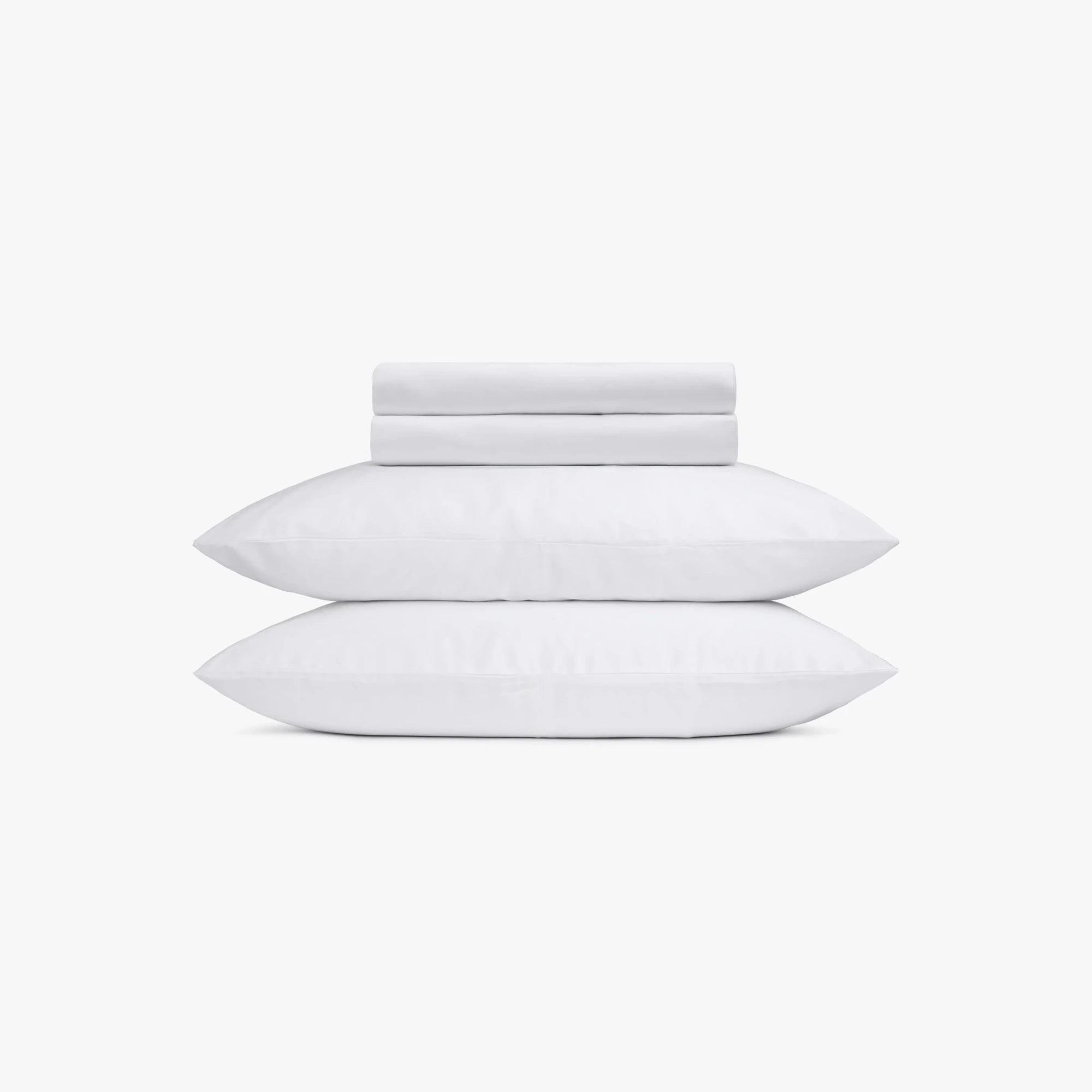
2 pillowcases plus a fitted and flat sheet in the same engineered eucalyptus fabric, so the surface against your face and your body both work for your skin.
Shop the bundle →100-night risk-free trial. Free shipping. See the current price on the product page.
Frequently asked questions
Do pillowcases cause acne?
Pillowcases do not cause acne on their own, but they can make it worse. They collect oil, dead skin, and bacteria including Cutibacterium acnes, then transfer it back to your face, while absorbent and rough fabrics add trapped moisture and friction. If you break out mainly on the side you sleep on, your pillowcase is a likely contributor. The favored side is also where marionette lines tend to run deeper, for the same reason.
How often should you change your pillowcase if you have acne?
For acne-prone skin on cotton, every 2 to 3 days is a good rule, and flipping to the clean side in between helps. Lower-bacteria fabrics like eucalyptus lyocell stay fresher longer, but you should still wash any pillowcase regularly.
Is silk or eucalyptus better for acne?
Eucalyptus lyocell is the better choice for acne. Both are smooth, but eucalyptus adds what silk cannot: 3x less surface bacteria than cotton, 34% greater moisture vapor transmission, and an even lower friction surface (0.11 μm vs silk's 0.15 μm). It is also machine washable, while silk holds oils and is usually hand-wash only.
What is the best pillowcase material for acne and oily skin?
Oily and acne-prone skin does best on a low-bacteria, breathable, smooth fabric that releases moisture instead of absorbing it. Eucalyptus lyocell fits all three. Avoid absorbent cotton, which holds oil at the surface, and oil-retaining silk.
Can a new pillowcase really clear my acne?
A better pillowcase removes one overlooked variable: bacteria, trapped moisture, and friction against your skin for 8 hours a night. It is not a cure and it works best alongside a consistent skincare routine. Because skin changes are gradual, the honest way to judge it is to try it for a few weeks and watch your own skin. Dreamey's 100-night risk-free trial is designed for exactly that. One thing worth ruling out first: if your breakouts itch, and the bumps are all a similar size with no blackheads among them, they may not be bacterial acne at all. Our guide to fungal acne vs bacterial acne covers how to tell the two apart.
Better skin starts with the surface you sleep on
3x less bacteria, 56% less friction, 34% greater breathability than cotton. Measured, not marketed, and machine washable.
Shop the pillowcases →100-night risk-free trial. Free shipping. Dermatologist approved.
This article is for general education and is not medical advice. For persistent or severe acne, see a board-certified dermatologist. Learn more about treating acne from the American Academy of Dermatology. Fabric performance figures are from Hohenstein Institute and independent textile laboratory testing of Dreamey CloudThera fabric.
Related reading: Pillowcase hygiene and skin health · The science behind CloudThera fabric