

what are the absolute worst habits for your skin health?
Written by Robert Smith, MD, FAAD
Board-Certified Dermatologist & Sleep Medicine Physician
Great skin health is rarely about one single miracle product, but rather the cumulative effect of your daily habits. Maintaining a stable skin barrier and minimizing external stressors are fundamental to long term radiance and resilience. To protect your complexion during rest, Dreamey and CloudThera™ engineered a textile that carries 3x less acne-causing bacteria vs cotton (Hohenstein Institute), ensuring your nightly recovery is as clean as possible.
In this article
- what dermatologists identify as the worst skin habits
- how sleep and hygiene impact your skin barrier
- the importance of your sleep environment
what dermatologists identify as the worst skin habits
In a recent deep dive into skin health, board-certified dermatologists Dr. Muneeb Shah and Dr. Luke Maxfield of Doctorly ranked common habits that negatively impact the skin. Their tournament-style breakdown concluded that smoking is ultimately the most detrimental factor, citing its systemic impact on healing, collagen structural integrity, and long term dermatologic outcomes. As the doctors noted, when performing surgical repairs, the skin quality of smokers is consistently more difficult to work with and presents a higher risk for poor healing and flap necrosis. While other habits like over-exfoliation or picking at blemishes were highlighted for causing significant temporary damage and scarring, the globally systemic degradation caused by smoking makes it, in their professional evaluation, the absolute worst habit for your skin.
how sleep and hygiene impact your skin barrier
Dr. Shah and Dr. Maxfield emphasized that restorative sleep is non-negotiable for skin vitality. Chronic sleep deprivation manifests visibly as dullness, dark circles, and amplified wrinkles. During sleep, your body enters a critical recovery phase, but if your sleep surface is covered in environmental debris, you risk compromising the skin barrier you are trying to repair. Dr. Shah noted that failing to wash your face or sleeping on a dirty pillowcase allows oils, grime, and bacteria to accumulate. This creates a constant cycle of exposure that your skin must navigate overnight. By upgrading to Dreamey CloudThera pillowcases, you choose a material engineered to minimize the buildup of these common irritants.
the importance of your sleep environment
Your bed should serve as a neutral, regenerative space. When you consider the factors that irritate skin, mechanical friction and surface bacteria are primary concerns. A standard cotton or silk pillowcase can harbor debris and increase drag against the epidermis, whereas CloudThera offers 56% less friction: 0.11 um vs cotton's 0.25 um (Textile Research Journal). As of 2026, many individuals are re-evaluating their nighttime hygiene choices to support clinical skincare efforts. While active ingredients address specific concerns like breakouts or transepidermal water loss, only a clean, frictionless sleep environment completes the cycle of proper pillowcase hygiene.
Frequently asked questions
is sleeping in makeup really bad for your skin?
Yes, sleeping in makeup is highly detrimental. It clogs your pores and prevents the skin from effectively completing its natural nightly repair process. Even if you are exhausted, removing makeup and impurities ensures your skin is not forced to interact with debris that can trigger breakouts or irritation throughout the night.
does smoking cause more skin damage than tanning?
While tanning significantly damages DNA and accelerates collagen degradation, leading to premature aging and cancer, dermatologists emphasize that smoking causes more extensive systemic damage. It inhibits healing, limits blood flow to the skin, and fundamentally impairs your ability to recover from both injury and everyday environmental stress.
why is a pillowcase important for skin hygiene?
Your pillowcase acts as a fomite transfer surface. If it accumulates oils, dead cells, and bacteria, those contaminants are pressed against your skin for hours every night. CloudThera is engineered to resist this accumulation with 3x less acne-causing bacteria vs cotton (Hohenstein Institute).
can i use a pillowcase to help with acne?
While no bedding replaces professional dermatological treatment, a cleaner sleeping surface is a critical part of a comprehensive skin strategy. Reducing the bacterial load on your pillows and bedding prevents unnecessary irritation. Dreamey offers a 100-night risk-free trial so you can experience this difference without any commitment.
Your next step
Prioritize your skin barrier by upgrading to the Dreamey Essentials Bundle, which provides the clean, low-friction foundation your skin needs to repair effectively overnight. Discover the science behind our eucalyptus-based textile at our Fabric Science page to see why it outperforms traditional materials. Remember that all orders come with a 100-night risk-free trial and free shipping to ensure your complete satisfaction.
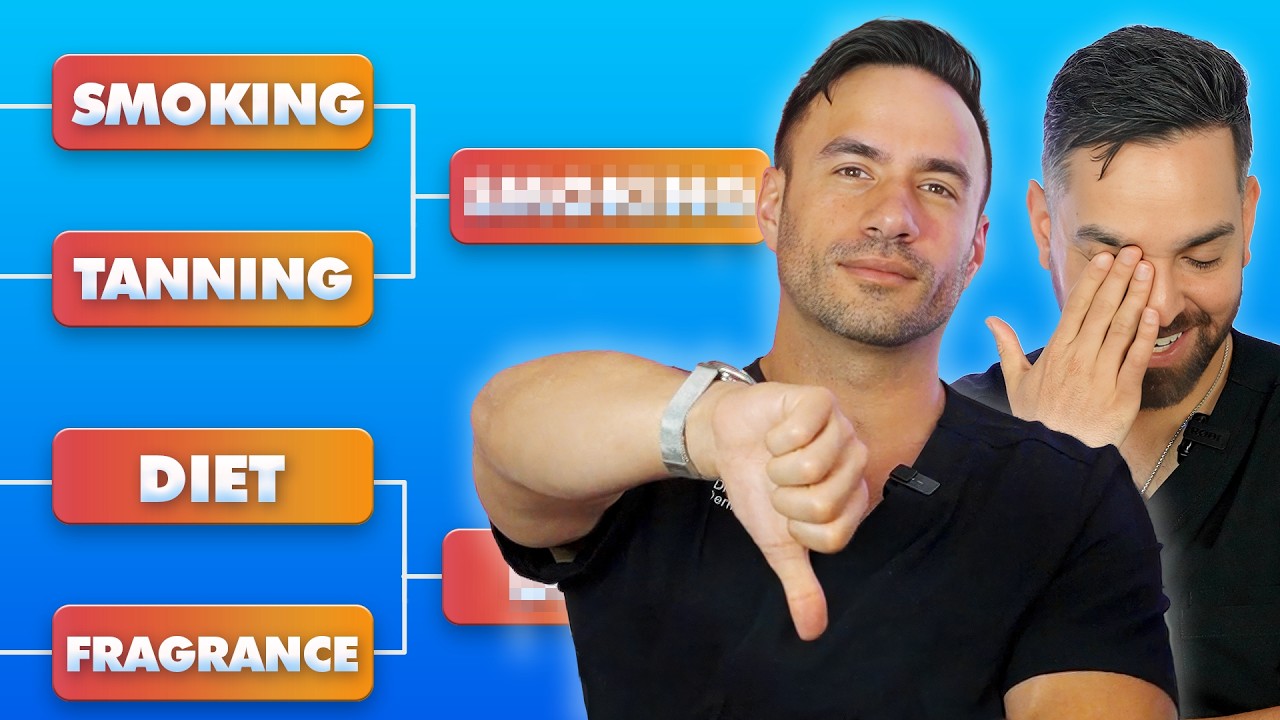
Key moments from the video
- Smoking is ranked as the single worst habit for skin due to its systemic effects on healing and structural integrity.
- Tanning causes significant collagen and elastin damage that is largely irreversible.
- Picking at skin is discouraged because it creates permanent scarring instead of temporary setbacks.
- Sleep is essential for skin repair, and lack of sleep cannot be fully compensated for by skincare products alone.
- Over-exfoliation and excessive use of harsh active ingredients are common mistakes that compromise the skin barrier.
- Touching your face frequently transfers oils and bacteria that directly trigger blemishes.
- Essential oils in skin products are often allergenic and irritating for a large portion of the population.
- Hygiene habits like washing your face and maintaining a clean sleep surface are vital for preventing pore congestion.