

How to protect your skin from common nighttime contact issues
UpdatedWritten by Robert Smith, MD, FAAD
Board-Certified Dermatologist & Sleep Medicine Physician
Skin growths and surface irregularities are common occurrences that often require professional evaluation to rule out underlying conditions. While many lesions like skin tags, milia, or minor bacterial issues are benign, your environment significantly affects skin health. Dreamey CloudThera™ bedding incorporates a specialized material with 3x less acne-causing bacteria than cotton (Hohenstein Institute) to support a cleaner sleeping surface.
In this article
- Understanding skin growths and lesions
- Why your pillowcase acts as a transmission vector
- The role of friction and moisture in skin health
- How to manage contact-based skin issues
- Frequently asked questions
- Your next step
Understanding skin growths and lesions
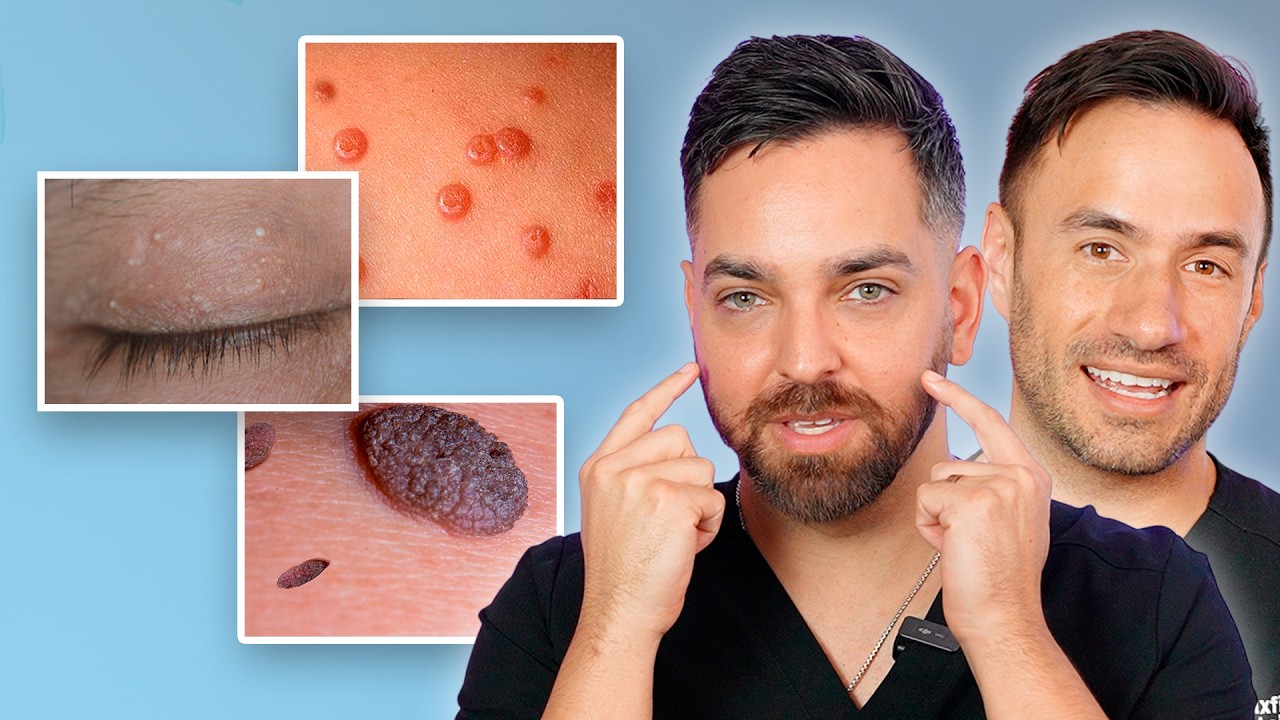
Dermatologists Dr. Muneeb Shah and Dr. Luke Maxfield of Doctorly observe a wide variety of skin lesions in clinical practice. Their recent video assessment highlights several common growths, such as dilated pores of Winer, milia, skin tags, and viral-induced lesions like molluscum contagiosum. Understanding these is the first step toward better skin management. For instance, Dr. Shah notes that milia are keratin balls trapped under the skin surface, often appearing around the eyes. While these are not necessarily caused by poor hygiene, occlusion from makeup or products can prevent natural exfoliation. Skin tags, on the other hand, are often linked to friction in areas like the neck or armpits. As these doctors point out, professional intervention is necessary for identification and safe removal. Attempting to manage these at home with incorrect tools can lead to infection or unnecessary scarring, so it remains essential to prioritize medical consultation for anything persistent or irregular.
Why your pillowcase acts as a transmission vector
While many skin issues have genetic or internal drivers, external factors such as fomite transfer—the transport of pathogens via inanimate surfaces—cannot be overlooked in a dermatology context. Your pillowcase is in direct contact with your face for 6 to 9 hours every night. If that surface harbors oils, dead skin cells, or bacteria, it creates a stagnant environment that can exacerbate existing breakouts or skin barrier irritation. Dr. Shah and Dr. Maxfield emphasize that viruses like those causing molluscum contagiosum can spread through shared household items, including towels and bedding. Maintaining rigorous pillowcase hygiene is a practical step for anyone with sensitive or reactive skin. Unlike traditional materials that may retain moisture and harbor acne-causing bacteria, CloudThera is engineered for superior moisture vapor transmission. Recent data indicates it offers 34% greater moisture vapor transmission (570 vs 425 g/m2/h) compared to standard options (independent textile lab), ensuring that the skin remains in a dry, inhospitable environment for bacterial proliferation. You can learn more about how our material science compares to conventional bedding by exploring our research hub.
The role of friction and moisture in skin health
Beyond bacterial presence, the physical nature of your sleep surface significantly influences the skin barrier. High-friction fabrics can drag against the skin, contributing to sleep creases and potentially exacerbating inflammation around sensitive areas. Dr. Maxfield mentions that skin tags often occur in flexural areas due to friction, which serves as a reminder that the mechanical stress placed on the skin matters. Dreamey CloudThera fabric delivers 56% less friction than cotton, with a surface roughness of 0.11 um compared to the 0.25 um measured in standard cotton (Textile Research Journal). By reducing the mechanical shear forces applied to the skin, you minimize potential irritation, which is particularly beneficial for those managing conditions like post-inflammatory hyperpigmentation or active acne. Because the textile is 100% plant-based and OEKO-TEX Standard 100 certified (OEKO-TEX), it provides a soft contact point that respects the skin barrier without the need for synthetic coatings or harsh chemical finishers.
How to manage contact-based skin issues
Effective management starts with recognizing that your skin needs a low-irritation environment, especially during recovery. If you are experiencing breakouts, pore congestion, or irritation, look for products that balance strength with gentleness. As of 2026, the focus in dermatology has shifted toward long-term maintenance rather than just periodic treatments. This includes adopting a consistent routine and ensuring your immediate environment is optimized. Using a fresh pillowcase is vital. Because of the fabric's composition, Dreamey CloudThera pillowcases stay fresh 2 to 3 times longer than cotton because they reduce odor-causing bacteria by 60% (Hohenstein Institute). This durability does not replace your skincare routine but acts as a complement to it, allowing your active ingredients to function without the interference of a contaminated surface. When caring for your bedding, opt for a machine wash on a cold or lukewarm gentle cycle. Avoiding harsh detergents will maintain the structural integrity of the fibers over time.
Frequently asked questions
Can my pillowcase cause acne?
A pillowcase does not cause acne, but it can contribute to bacterial colonization and pore congestion. If a pillowcase retains moisture and oils, it creates an environment where bacteria like Cutibacterium acnes can thrive. Dreamey CloudThera reduces acne-causing bacteria by 3x compared to cotton (Hohenstein Institute).
How often should I wash my pillowcase?
For those with acne-prone or sensitive skin, washing your pillowcase twice a week is standard. However, because CloudThera fabric resists bacteria and odor, it stays fresh 2 to 3 times longer than cotton (Hohenstein Institute), meaning it requires less maintenance to remain hygienic compared to traditional materials.
Can friction cause skin tags?
Yes, according to Dr. Luke Maxfield, friction from items like collars, necklaces, or rough bedding can contribute to the development of skin tags. Reducing surface friction is a proactive way to comfort your skin. CloudThera fabric significantly lowers friction, measuring 56% lower than the surface roughness of cotton (Textile Research Journal).
How can I tell if a skin growth is dangerous?
Any new, changing, or irregular growth should be evaluated by a board-certified dermatologist. Dr. Shah and Dr. Maxfield stress the A, B, C, D, and E rule for melanoma, which involves checking for asymmetry, border irregularity, color variations, large diameter, and evolving signs. Never rely on self-diagnosis for concerning lesions.
Does Dreamey offer a return policy if I am unsure?
Yes. We offer a 100-night risk-free trial for all our bedding products. If you are not satisfied with the improvement in your sleep or skin environment, we provide a simple return process with no restocking fees. Our commitment is to ensure the product meets your exact needs.
Your next step
Optimizing your sleep environment is one of the most effective ways to support your skin during its nocturnal repair cycle. Protect your face and hair by switching to our CloudThera pillowcases, designed to provide a low-friction, moisture-managing surface for every night of rest. Visit our science hub to better understand the technology behind your sleep health or start your 100-night trial with our most popular Essentials Bundle.
Key moments from the video
- A dilated pore of Winer is a structural hole in the skin resembling a blackhead that often refills if not removed entirely.
- Milia are hardened keratin balls trapped beneath the skin surface, often requiring physical extraction by a professional.
- Skin tags are common flesh-colored bumps that are frequently stimulated by friction in sensitive skin areas.
- Cherry angiomas are harmless collections of blood vessels that can often be treated minimally using electric needles or lasers.
- Seborrheic keratosis are benign, stuck-on skin growths that can sometimes mimic concerning lesions, making professional exam critical.
- Common warts are viral growths caused by human papilloma virus and often feature small, thrombosed capillaries.
- Molluscum contagiosum is a contagious viral condition common in children that typically resolves due to natural immune development.
- Spreading molluscum can occur through contaminated contact surfaces, including towels and communal bedding materials.