

which anti-aging ingredients are actually worth it?
Written by Robert Smith, MD, FAAD
Board-Certified Dermatologist & Sleep Medicine Physician
When it comes to slowing signs of aging, the market is flooded with complex formulas that often overpromise and underperform. Board-certified dermatologists Dr. Muneeb Shah and Dr. Luke Maxfield of Doctorly argue that consistency and core ingredients outweigh exotic trends. For those looking to optimize their skin health, integrating CloudThera pillowcases offers a measurable advantage, with 56% less friction than cotton, helping to protect delicate skin throughout the night (Textile Research Journal).
In this article
- the bracket approach to skincare
- analyzing the high performance contenders
- how to optimize your skin health at night
- frequently asked questions
- your next step
the bracket approach to skincare
To identify the most effective tools for healthy aging, Dr. Shah and Dr. Maxfield organized a bracket-style competition. By pitting heavy hitters like retinoids against newcomers like PDRN, they sought to force a verdict on what truly preserves skin tone and texture. The premise is simple: when you narrow down the noise, which ingredients or technologies offer the highest ceiling for results? In their analysis, the dermatologists reinforced that the foundation of any anti-aging strategy must be sun protection, which prevents up to 80% of aging skin changes. Ingredients like tretinoin and vitamin C then serve as the primary active treatments. Consistency remains the biggest challenge, an issue that leads many to look for shortcuts or simple, high impact habits that run in the background of their daily lives.
analyzing the high performance contenders
Once the foundational ingredients are established, the debate shifts to supporting players. Peptides were heralded by the doctors as an emerging staple for aging skin due to their specific, targeted benefits. In the showdown between LED therapy and hydroquinone, the experts ultimately favored LED light devices for their ability to stimulate collagen production and improve skin tone without the time limitations associated with topical bleaching agents. Throughout the discussion, a recurring theme emerged regarding skin barrier health. The skin barrier relies on moisture retention and the prevention of transepidermal water loss, defined as the passive evaporation of water from the skin to the environment. Aggravating the barrier with excessive friction or bacterial buildup can counteract even the most potent topical routine. This is where the interface between your face and your pillowcase becomes a critical, often overlooked frontier.
how to optimize your skin health at night
Your nighttime routine should facilitate recovery, not perpetuate damage. While you sleep, your face spends roughly 2,920 hours a year pressed against a pillowcase. Traditional cotton surfaces generate significant friction and accumulate oils, which can lead to unwanted sleep creases and pore congestion. Dreamey engineers its CloudThera fabric – a 100% plant-based eucalyptus textile – specifically to address these friction and hygiene concerns. According to the Hohenstein Institute, CloudThera hosts 3x less acne-causing bacteria than cotton, creating a cleaner environment for reactive or sensitive skin. By reducing the drag on your skin, the material respects the hard work of your active ingredients, ensuring you do not wake up with pillow marks or unnecessary irritation. It serves as an essential, passive supporting layer that works while your skin regenerates, ensuring your topical efforts are complemented, not compromised, by your sleep environment.
Frequently asked questions
does tretinoin outperform retinol for anti-aging?
Dr. Muneeb Shah and Dr. Luke Maxfield conclude that while tretinoin remains the gold standard due to its potency, retinol is often more gentle and effective for those who find tretinoin too irritating. Both facilitate cell turnover, but they work at different speeds and intensities within the skin.
which ingredient is best for dark spots?
Hydroquinone is identified by the dermatologists as the historic gold standard for inhibiting tyrosinase, the enzyme responsible for pigment production. However, its use is often limited to 3-month cycles. Beyond hydroquinone, consistent use of sunscreen is the most reliable way to prevent dark spots from worsening.
can a pillowcase really improve skin health?
While skincare products provide the active treatment, your pillowcase is a surface you touch for hours nightly. CloudThera pillowcases offer a low friction surface that reduces sleep creases and has 3x less acne-causing bacteria than cotton, providing a cleaner, more supportive environment (Hohenstein Institute).
is copper peptide better than vitamin C?
The specialists note this is a difficult comparison because vitamin C is a foundational antioxidant with decades of data. Copper peptides are highly effective and targeted, but vitamin C remains a primary choice for collagen synthesis and protection for the majority of the public.
what comes with the 100-night trial?
Dreamey offers a 100-night risk-free trial on all products, including the Essentials Bundle. This allows you to experience the difference in skin feel and morning freshness for yourself, with free shipping across the U.S. and Canada and no restocking fees on returns.
Your next step
Optimizing your aging strategy requires the right combination of active ingredients and a protective environment. Start by upgrading your nightly setup with a CloudThera pillowcase to minimize friction and bacterial exposure while you rest. Explore the full science behind our fabric at our Fabric Science hub and take advantage of our 100-night guarantee to see the results for yourself.
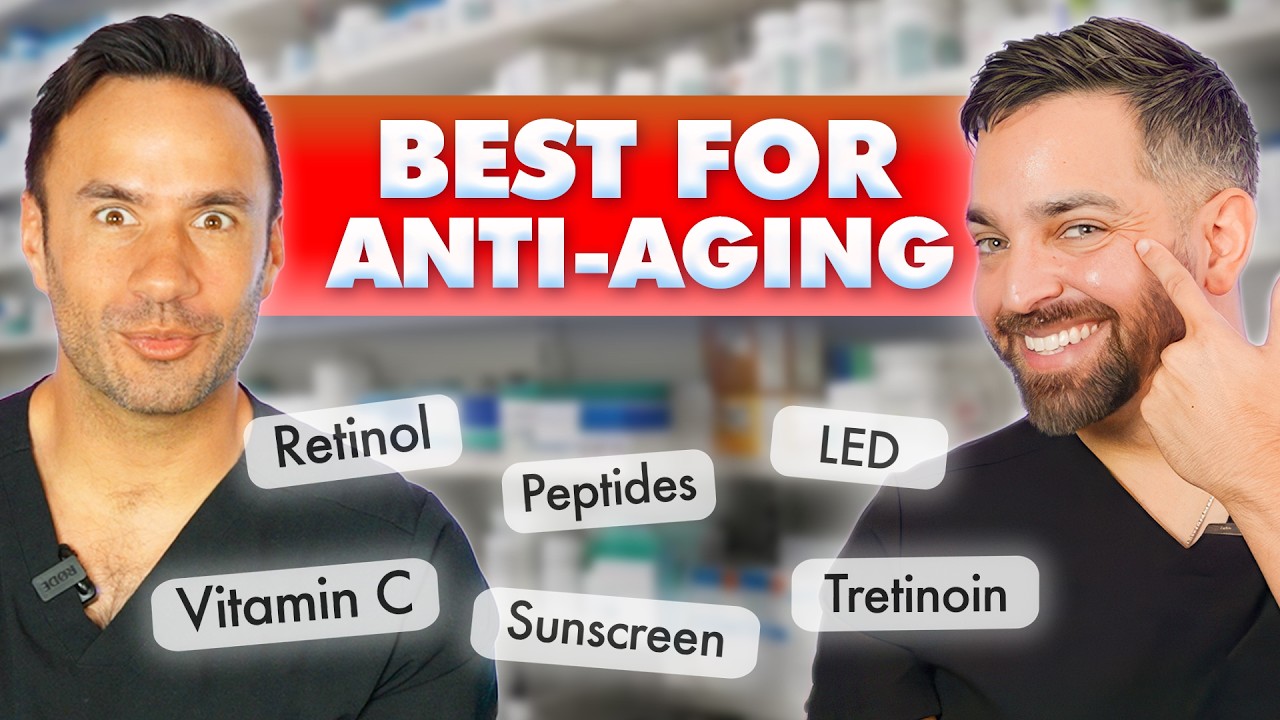
Key moments from the video
- Tretinoin is considered the most powerful retinoid for anti-aging and acne regulation.
- Retinol is the gentler alternative to tretinoin that converts more slowly in the skin.
- Sunscreen is identified as the most vital step to prevent 80% of aging skin changes.
- Vitamin C is a critical co-factor for collagen synthesis and a necessary topical antioxidant.
- Peptides are recognized as a versatile category of ingredients that provide targeted firming and skin support.
- Hydroquinone remains the benchmark for treatable dark spots but requires careful cycle management.
- LED therapy, specifically red light wavelength, is an option for stimulating fibroblast tone and collagen.
- Growth factors are emerging as a powerful way to support skin thickness and overall texture.